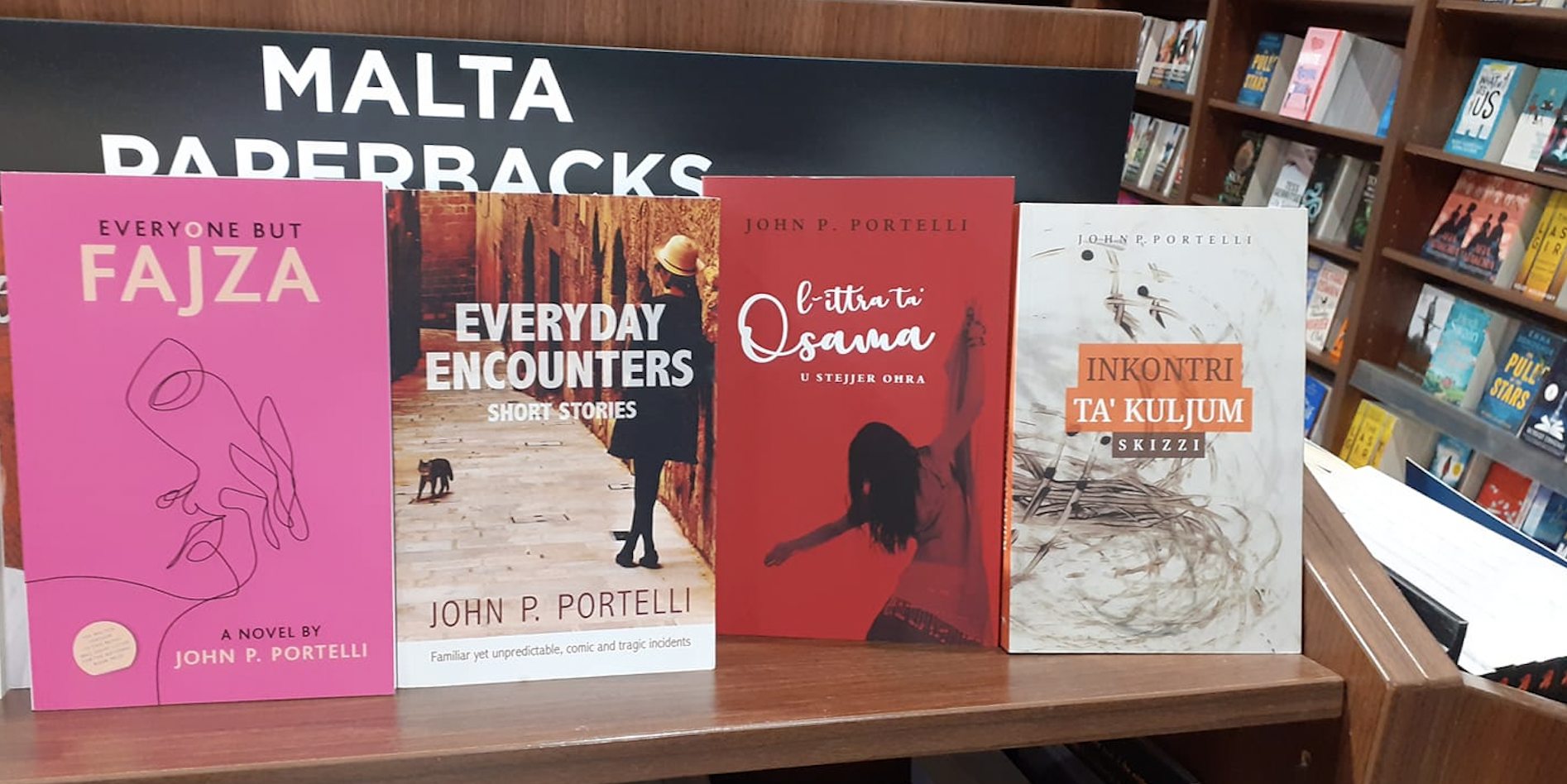
Fiction and short stories
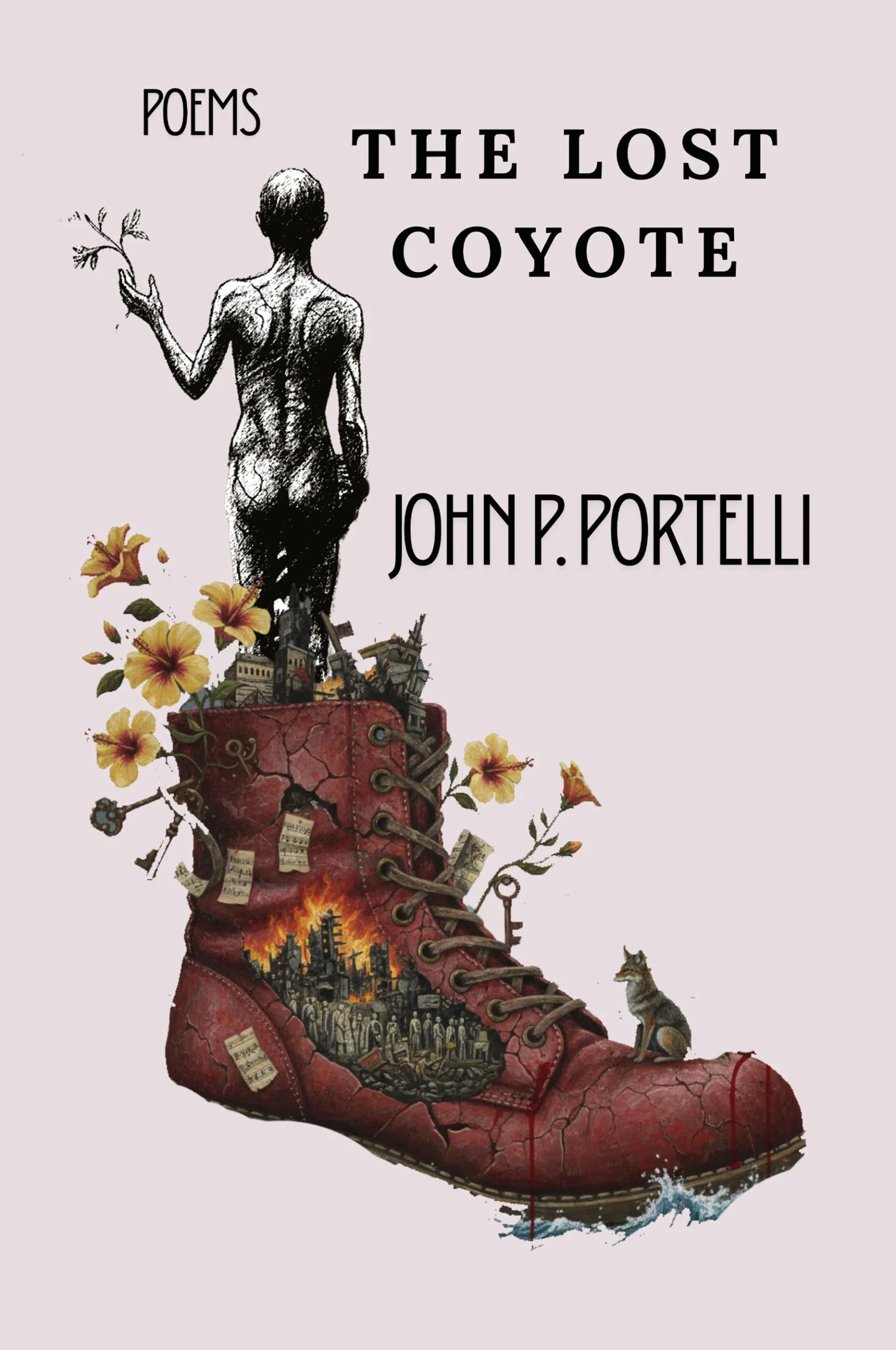
The Lost Coyote
John P. Portelli’s The Lost Coyote is a profound meditation on dislocation as a metaphysical state, an unflinching document of the human spirit’s endurance amid catastrophic temporal and geographic rupture. This collection transcends mere memoir or political commentary, operating instead as a rigorous philosophical inquiry into the dialectic of belonging and exile, where the concept of “home” is eternally reduced to the “in-between.”
Portelli employs a stark, almost cinematic lyricism to expose the scars of history, weaving personal memory—fragments of past loves, Mediterranean seascapes, and domestic moments—into the massive, impersonal horror of geopolitical violence. His poetry performs a constant deconstruction of time, where “yesteryear” and the present are fused by perpetual trauma. The clock face—a recurring visual and thematic motif—serves not as a measure of linear progress, but as a circular witness to a history that ceaselessly repeats its atrocities. The titular “lost coyote” is the ultimate symbol of the alienated subject: an existence “unnoticed,” howling at a universe that remains taciturn. Love, when it appears, is framed by its own futility and transience, a brief “fictitious embrace” or a fragile desire caged by a world that demands a “perfect silence.”
This is a necessary, formidable work that establishes Portelli as a major voice charting the enduring sorrow and moral complexity of a globalized, yet fragmented, world.
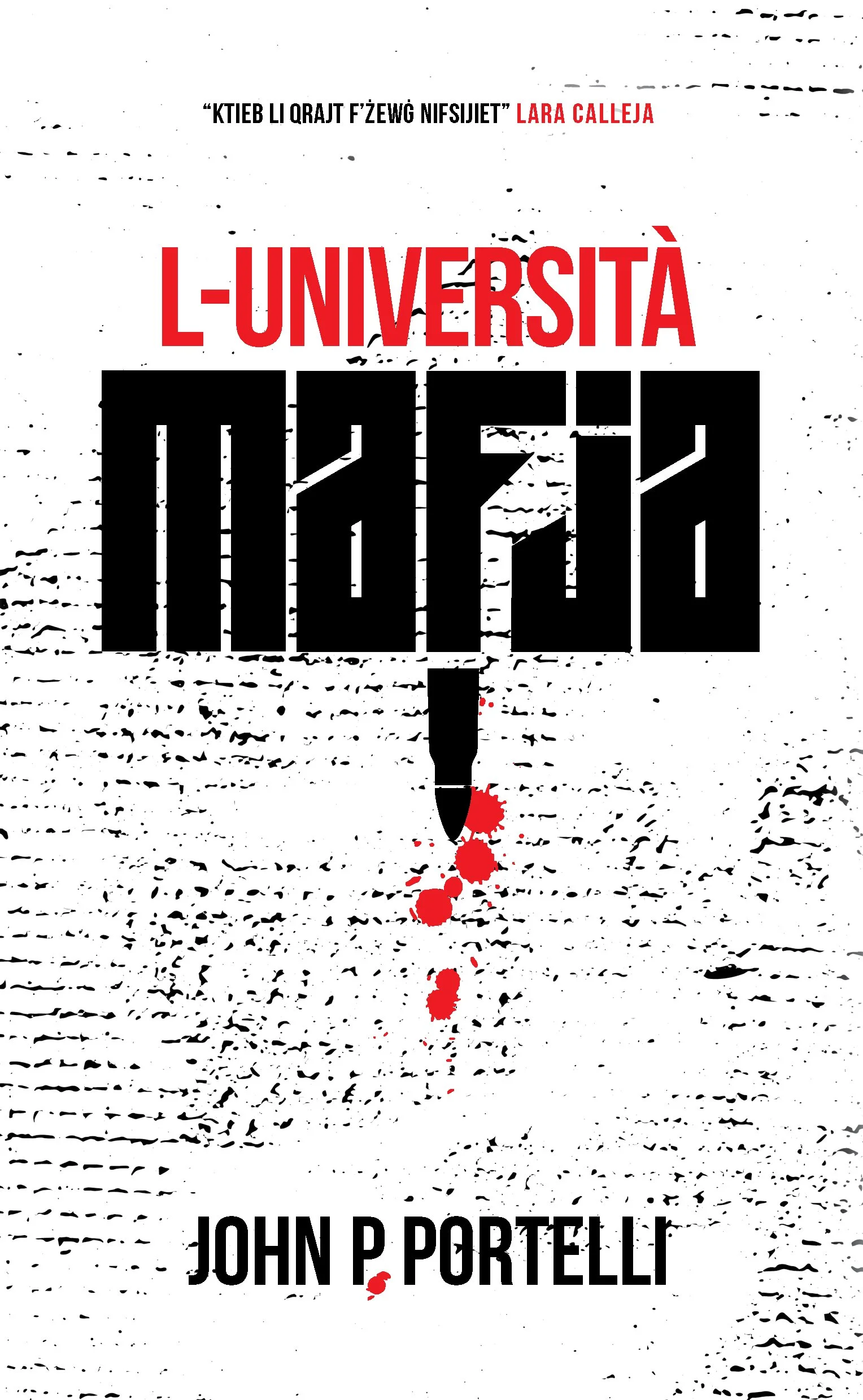
L-Università Mafia
“Ktieb li qrajt f’żewġ nifsijiet”
Lara Calleja
F’dan ir-rumanz, Portelli ma joqgħodx lura mis-satira tal-politika fl-akkademja. Tista’ tidħaq jew tieħu għalik, kif tixtieq int. Nagħti garanzija li xi ħaġa żgur se tissorprendi lill-qarrejja.
Robert Pisani
Portelli jirnexxilu jwaħħad flimkien l-esperjenza tal-emigrazzjoni u l-ħajja fi ħdan l-istituzzjoni universitarja, bil-makkinarju ta’ poter tagħha li jitlob konformità. Portelli ma jinħebiex wara strataġemmi letterarji; f’kull paġna tħoss ir-rabja, il-frustrazzjoni,
u d-diżillużjoni ta’ min kellu ideali għolja u rahom jiġġarrfu quddiemu. Forsi fl-aħħar mill-aħħar dak hu l-effett tal-mafji kollha kemm huma: it-tiġrif tal-ispirtu uman, it-telf tat-tama. Hekk biss il-mafja tirrenja.
Aleks Farrugia
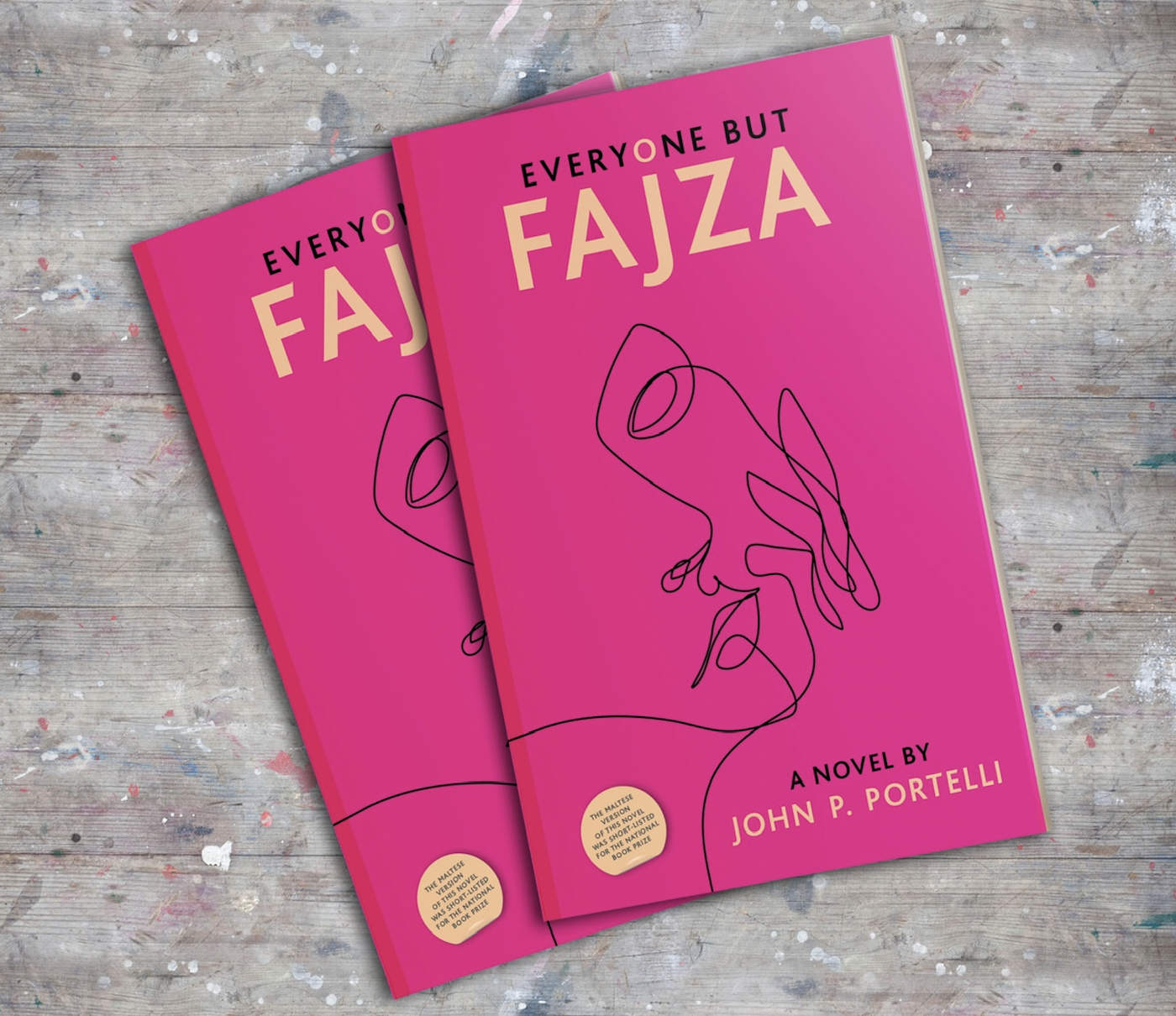
Everyone But Faiza
Media reports erupt when Fajza is discovered with gunshot wounds, unconscious and abandoned next to one of Toronto's most violent high schools. As she lays in a hospital bed, those closest to her must grapple with the hand each of them played in her uncertain future. Through their narratives, an image of Fajza emerges; the wife of a prominent businessman, a child of Maltese immigrants, a woman struggling to find her identity, a jealous sister.
As we hear from everyone but Fajza herself, we are immersed in a captivating tale of family, migrant life and the tensions between traditional and progressive values.
Are we more than a collection of people's impressions?
Who is at fault when everyone is to blame?
Will Fajza survive to tell her own story?
A page-turning story of resilience and loss, Everyone but Fajza beautifully captures the complexity of the migrant experience in Canada.
Rave Reviews for Everyone But Fajza
“Everyone but Fajza by John Portelli is a deft and devastating examination of how the drive to cultivate and preserve our identities can nullify the identities and experiences of others. This is a tale that's as much about what's not said and whose voices are not heard. Portelli bravely revels in the significance of negative space to create a haunting and compulsively readable book. Highly recommend!”
Hollay Ghadery, author of Fuse (Toronto: Guernica, 2021).
More novels and short stories from John
-

Kulħadd Barra Fajża
Fajża. Ir-rebbieħa telliefa. Il-preżenti assenti. Il-mimmi ta’ kull għajnejn li qatt rawha. X’sar minnha? Sensiela ta’ koinċidenzi, jew kollox ippjanat?
Xogħol soċjopolitiċizzat li jittrasmetti t-tensjoni u l-ħtija minn paġna għal paġna u minn karattru għal ieħor, filwaqt li jpoġġi l-filosofija f’forma narrattiva distintiva li żżid il-loġika taċ-ċarezza u l-ambigwità fl-istess waqt.
Rakkont li jipprovoka s-sensi kollha, b’dak kollu li jinvolvi l-moħħ miftuħ u l-ġenerożità ta’ ħsieb.
Walid Nabhan
-

Everyday Encounters
Portelli has reinvented the genre of the short story. One has to move on, with one’s imaginary hopping from one stance to another, from rancour to joy, resentment to kindness, holiness to blasphemy. Some moments of our lives are the most memorable ones, and are more significant than hours or maybe years… Moments of happiness, loss, embarrassment, moments of hope. Portelli writes about these memorable moments. Portelli’s swift, conceptually clear and sharp short stories provide us with ordinary yet complex social encounters… sublime encounters that transfer authentic realities into realistic narratives.
-

L-ittra ta’ Osama u stejjer oħra
Dawn l-istejjer pikużi ta’ Portelli jirrakkontaw, kultant bl-akbar notorjetà, id-dupliċità tal-valuri eterni tal-bniedem fis-soċjetà kontemporanja, irrispettivament minn fejn qed isseħħ u min huma l-protagonisti tal-ġrajja. Portelli mhux qed jissuġġerixxi alternattivi ġodda għall-ħajja, iżda jisfida l-kontemporanjetà tal-valuri tagħha permezz ta’ versatilità narrattiva mill-aktar fittiexa.
Walid Nabhan
-

Inkontri Ta’ Kuljum – Skizzi
L-iskizzi huma msawra fuq inkontri eżistenzjali li niltaqgħu magħhom kuljum. F’dawn l-iskizzi l-karattri jsibu ruħhom f’dilemmi mhux maħlula. Dawn l-iskizzi jagħtu ħjiel tal-kumplessità normali u straordinarja fl-istess ħin tal-inkontri fil-ħajja.